
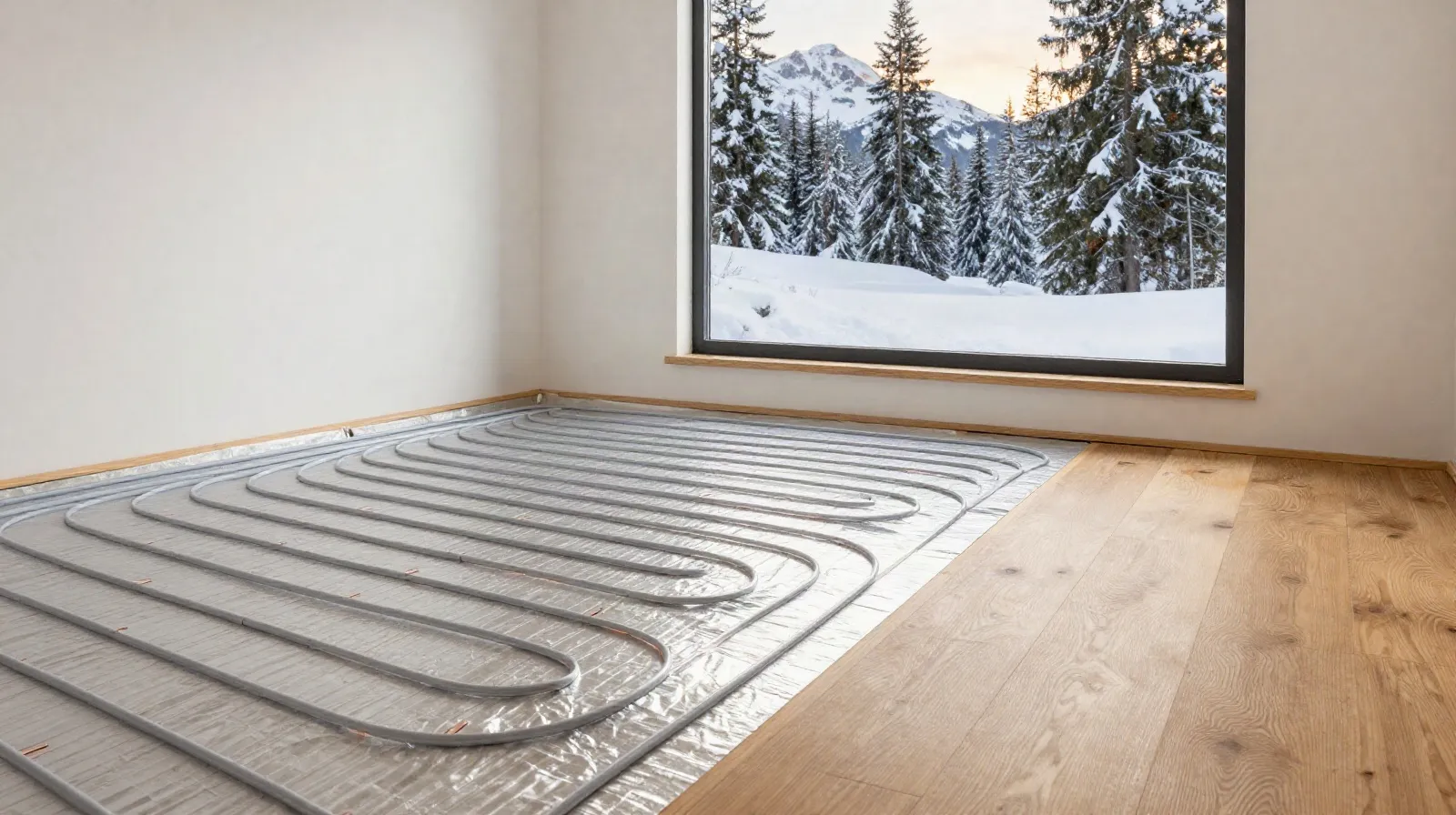
Yes, a tiny house can have underfloor heating. For most tiny houses the most practical choice is thin electric heating laid under the floor covering. Hydronic systems are also possible, but they need a boiler or heat pump and add height and weight, so they make more sense in larger, fixed homes.
Types of underfloor heating
- Electric film: only millimetres thick, laid over insulation under suitable laminate or SPC flooring. Light, with no boiler, it suits trailer-mounted homes.
- Electric cable or mat: embedded in tile adhesive or a thin levelling layer. A popular choice for bathrooms and tiled floors. Use products rated for wet areas.
- Hydronic: warm water circulates through floor pipes, heated by a boiler or heat pump. Traditional screed adds significant weight and thickness.
How much electricity does it use?
Output typically ranges from around 100 to 200 W/m², depending on the product. As an illustration only: 12 m² of heated floor at 120 W/m² is about 1.44 kW. If the thermostat cycling works out at six full-power hours per day, that is roughly 8.6 kWh daily. Multiply by your own electricity rate for an estimate. Insulation and thermostat settings have the biggest effect.
Underfloor heating, air conditioning or a stove?
On the mild Mediterranean coast, an inverter air conditioner you need for summer anyway also heats efficiently, so underfloor heating is mainly a comfort choice, with a small bathroom mat being especially worthwhile. In colder highland districts, well-insulated underfloor heating can be the main comfort system, with a backup heater. Off-grid, electric floor heating drains batteries quickly in winter, so a wood or pellet stove is more realistic, with a proper flue, ventilation and a carbon monoxide detector.
Installation essentials
- Insulate the base first, especially on trailer homes where air passes under the floor.
- Do not lay heating under fixed furniture.
- Choose flooring approved for underfloor heating and respect its temperature limit.
- Use a dedicated circuit, residual-current protection and a qualified electrician.
- Fit a thermostat with a floor sensor, and keep sleeping lofts in mind, since warm air rises.
Frequently asked questions
Can a mobile tiny house have underfloor heating?
Yes. Thin electric film suits mobile homes well. Heavy screed systems are generally avoided because of the extra load on the chassis.
Is it cheaper than air conditioning?
Usually not. An inverter air conditioner produces more heat per unit of electricity. The advantages of underfloor heating are silence, even warmth and comfort.
Will it work on solar power?
Technically yes, but winter production is low just when demand is high. It is not recommended as the main heating for an off-grid home.
Can it be added later?
Yes, but it raises the floor and works poorly over weak base insulation. It is best planned while the house is being built.
Plan your heating with us
Beyaz Tiny House recommends planning heating around your climate, insulation and use. See our models, request a free quote, call +90 542 791 00 00 or message us on WhatsApp (+90 540 745 44 44). Our guide to tiny house toilet drainage may also help you plan your utilities.