
A tiny house toilet drains much like one in a regular home: waste runs through a sloped pipe to the sewer or to a sealed septic tank. Where that is not possible, composting and cassette toilets need neither water nor a drain line. The right choice depends on your land and on how you plan to use the house.
Five ways to handle toilet waste
- Sewer connection: the simplest option if a line runs nearby. Ask the local municipality or water and sewer authority about connection requirements.
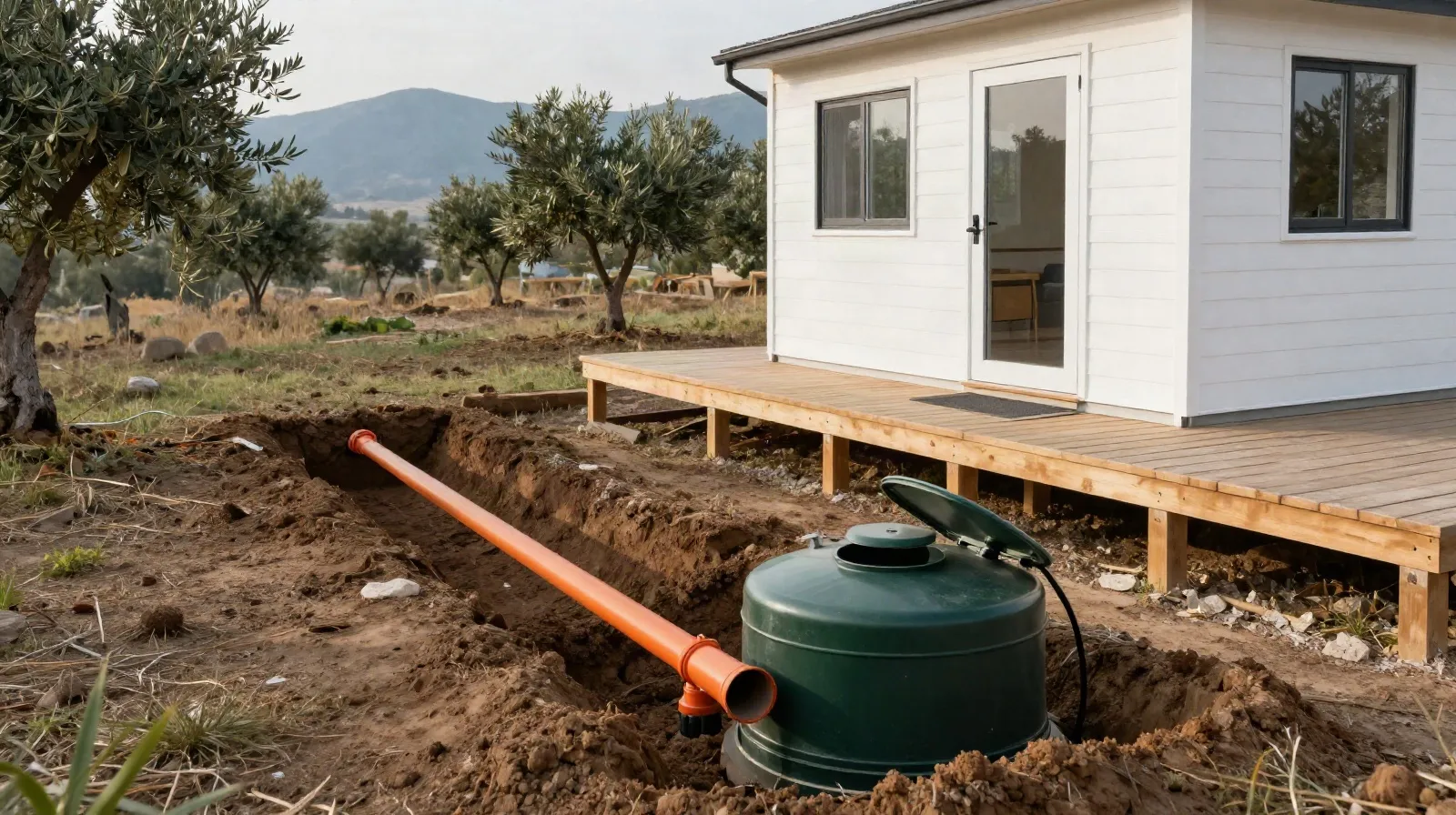
- Sealed septic tank: the most common choice on land without a sewer. The tank is emptied by a vacuum truck. Avoid open-bottomed pits, which can contaminate groundwater.
- Macerator pump: grinds waste and pushes it through a narrow pipe when a natural slope is not available. It needs electricity and makes some noise.
- Composting toilet: uses no water and needs no drain pipe, but the container must be emptied regularly. It suits off-grid land well.
- Cassette toilet: waste collects in a removable cassette. It is best for weekends and short stays.
Pipe size, slope and venting
Toilets usually connect to a 100 mm drain pipe. A slope of roughly 1–2 cm per metre is a common guide for gravity lines. A vent pipe through the roof protects the water seal in the traps and keeps smells out. All of this is far easier to plan while the house is being built.
Toilets in mobile tiny houses
On a trailer-mounted house, the drain leaves through the chassis. The connection should be removable, and exposed pipework must be protected from impact and frost. Before moving, disconnect the line and cap the openings.
How often does a septic tank fill up?
As a rough example, two people using about 100 litres each per day would fill a 3,000-litre tank in about 15 days if all waste water enters it. If only toilet waste goes in, using around 45 litres per day, the same tank lasts over two months. Dual-flush cisterns and water-saving fittings make a real difference. Make sure a vacuum truck can reach the tank, and keep it as far as possible from any water well.
Local conditions in Mersin and Antalya
On coastal plains such as the Göksu plain near Silifke, groundwater can be high, so empty tanks may need anchoring. Rocky Taurus slopes make excavation harder. In cold highland districts, exposed pipes can freeze and must be buried or insulated. Rules vary by municipality and land type, so please confirm with the local authorities before you start. See our Mersin and Antalya pages for regional information.
Frequently asked questions
Can I use a normal toilet in a tiny house?
Yes. With a sewer or septic connection you can use a standard or wall-hung toilet. A dual-flush cistern reduces water use.
Will a tiny house toilet smell?
A properly installed system should not. Smells usually come from a dried-out trap, a missing vent pipe or a leaking tank connection.
Can I have a toilet without a septic tank?
Yes. Composting and cassette toilets work without a septic tank or drain line, and a sewer connection also removes the need for one.
Can the drain freeze in winter?
Uninsulated, exposed pipes can freeze in cold highlands. Burying the line, insulating exposed sections and using heating cable where needed greatly reduces the risk.
Plan your tiny house with us
Beyaz Tiny House plans the toilet and drain line around your land from the build stage. See our models, request a free quote, call +90 542 791 00 00 or message us on WhatsApp (+90 540 745 44 44). You may also like our guide to tiny house underfloor heating.